
Special Session 6: Special
Session on Emerging Technologies for Secure and
Intelligent Information Processing and
Communications (Flyer)
| Chair | Co-Chair |
 |
 |
|
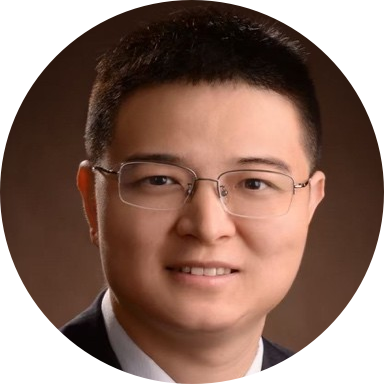
Assoc. Prof. Ling Liu Guangzhou Institute of Technology, Xidian University, China |
Assoc. Prof. Zheng Wang Southeast University, China |
Invited Speaker |
 |
|
Assoc. Prof.
Shanxiang Lyu Jinan University, China |
This special session focuses on
Emerging Technologies for Secure and Intelligent
Information Processing and Communications, aiming to
bring together researchers and practitioners working at
the intersection of security, intelligence, and
next-generation communication systems. With the rapid
development of information and communication
technologies (ICT), emerging paradigms such as
artificial intelligence, post-quantum cryptography,
distributed learning, and intelligent signal processing
are reshaping how information is processed, transmitted,
and protected. At the same time, new security and
privacy challenges arise in complex and heterogeneous
communication environments.
The session will
cover recent theoretical advances, algorithmic
developments, and practical implementations that enable
secure, reliable, and intelligent information processing
and communications. Topics of interest include, but are
not limited to: intelligent and learning-based
communication systems, secure signal processing,
privacy-preserving machine learning, post-quantum and
lightweight cryptography, physical-layer security,
secure distributed and federated learning,
information-theoretic security, and applications in
emerging scenarios such as 6G networks, Internet of
Things, and cyber–physical systems.
By providing
a multidisciplinary forum, this special session aims to
foster cross-fertilization between security, information
theory, signal processing, and artificial intelligence,
and to highlight new research directions and challenges
in secure and intelligent communication technologies.
Submission Link: https://www.zmeeting.org/submission/ictc2026 (Choose Special Session 6 to Submit)
Special Session Organizers Biography:
Dr. Ling Liu is an associate
professor at the Guangzhou Institute of Technology,
Xidian University. He earned his bachelor's degree from
Nanjing University (2008), master's degree from Peking
University (2011), and Ph.D. from Imperial College
London (2015), all in electronic engineering. He
previously worked at Huawei Central Research Institute,
where he was engaged in research on 5G polar codes. In
2023, he joined Xidian University. He has led projects
funded by the National Natural Science Foundation of
China, the Provincial Natural Science Foundation of
Guangdong, and the Tencent Rhino-Bird Research Program.
He received the Best Paper Award at IEEE WCSP 2021.
Dr. Zheng Wang
is an Associate Professor and Ph.D. Supervisor at
Southeast University, a Jiangsu Province “Double
Innovation” (Shuangchuang) Scholar, and a Senior Member
of IEEE. He has been consecutively selected as a Highly
Cited Chinese Researcher in the field of Information and
Communication Engineering by Elsevier in 2023 and 2024.
In recent years, Dr. Wang has led more than ten
competitive research projects, including sub-projects of
National Natural Science Foundation of China (NSFC) Key
Projects, General Programs, and Young Scientists Funds.
He has published over 80 research papers in leading
international journals such as IEEE Transactions on
Information Theory (TIT), IEEE Transactions on Signal
Processing (TSP), IEEE Transactions on Wireless
Communications (TWC), and IEEE Transactions on
Communications (TCOM). His research achievements have
been recognized with major awards, including the First
Prize of Jiangsu Provincial Science and Technology
Progress Award and the “Spark Award” from Huawei
Technologies Co., Ltd. He currently serves as a Young
Editorial Board Member of the Chinese Journal of
Electronics (CJE) and as a Co-Chair of international
conferences such as IWCMC.